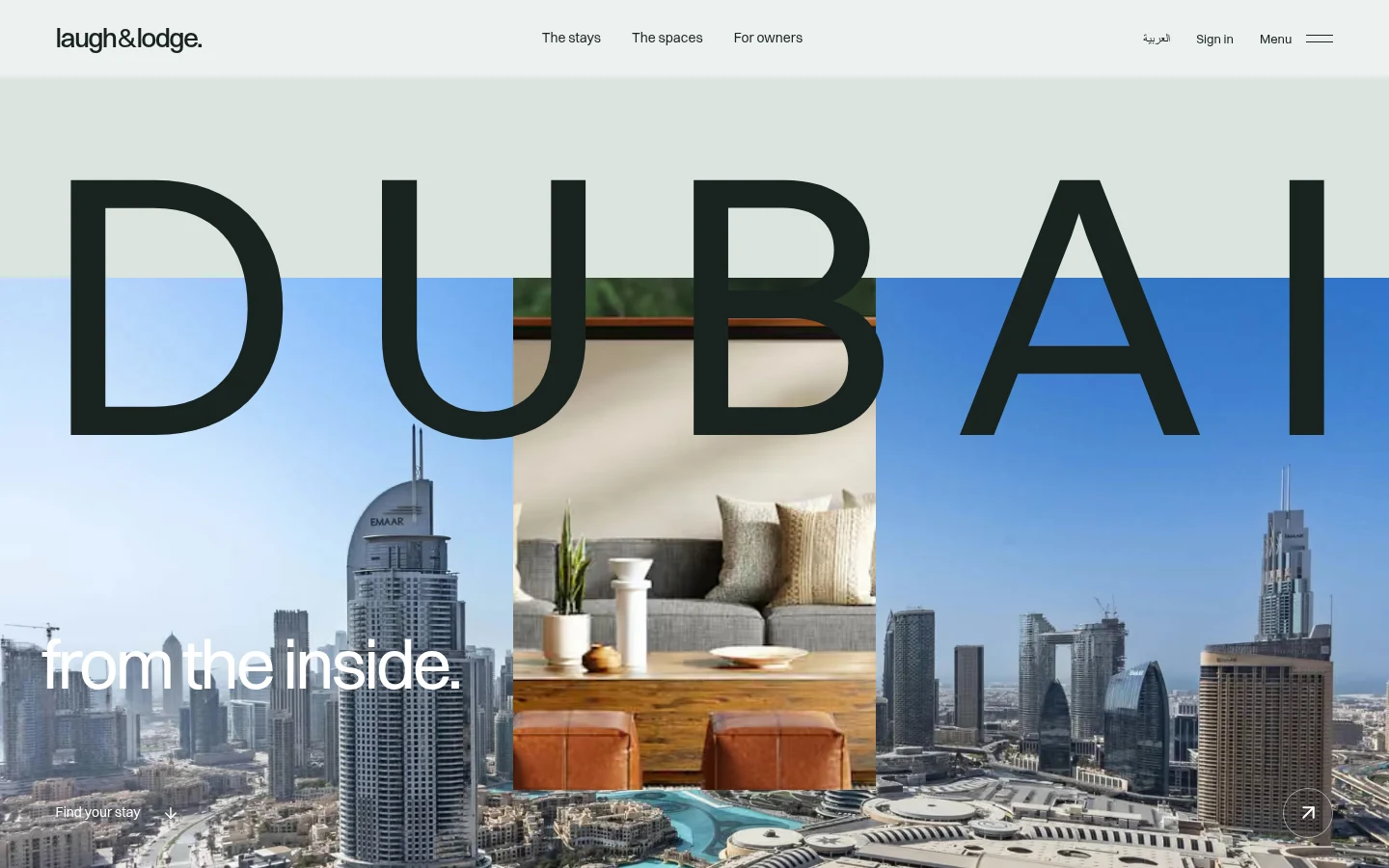
The design had to feel welcoming without making the transaction vague. We followed the reservation beyond the room photograph, into the dates, the payment and the host’s responsibilities.
How do you protect a moment of possibility?
The experience should feel unhurried. The system cannot be. A temporary hold protects the selected dates while checkout happens, then payment events determine what comes next.
Every screen.
The same intention.
The experience is reworked for a smaller screen, with the same care for the journey. Explore the live site or open it in your browser.

Follow the decision.
Choose dates
↗Hold inventory
↗Checkout
↗Payment event
↗Confirmation
A simplified illustration of the product workflow.
Time to
make it yours.
Try the handoff from availability to a confirmed reservation. This local demonstration makes no booking or payment.
Your dates are available
A hold protects inventory. It does not confirm payment.
Make room for the guest.
Photography establishes the feeling of a place. Search, dates, guests and pricing give that feeling a practical next step. The interface keeps the property at the centre of the decision.
Treat availability as a promise.
Overlapping requests need an authoritative answer. Temporary reservations create a bounded checkout window, with expiry returning inventory to the pool rather than leaving it stranded.

Follow the money through.
The checkout response is only one part of the story. Payment events, booking confirmation and vendor ledger entries carry the reservation into the operational and financial systems that fulfil it.
confirmation follows an authoritative payment event. The booking state and the financial trail remain distinct, connected responsibilities.
What could we build for you? ↗