

We treated the shipment as one continuous story across customer, merchant, driver and operations. The interface changes with the role, while the order keeps its identity.

Who owns the next move?
At each handoff, somebody gains responsibility. The software needs to know who can act, what has changed and which conditions must hold before the delivery can progress.
Every screen.
The same intention.
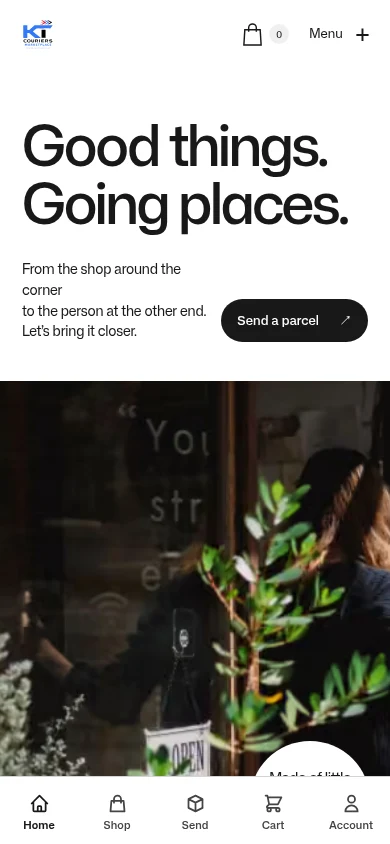
The experience is reworked for a smaller screen, with the same care for the journey. Explore the live site or open it in your browser.
Follow the decision.
Order
↗Allocation
↗Collection
↗Custody
↗Delivery
A simplified illustration of the product workflow.
Same order.
Different hands.
Ready for collection.
The order is prepared. Its inventory and fulfilment requirements travel with it.
An order is more than an address.
Inventory, payment responsibilities and fulfilment requirements begin the journey before a driver is assigned. The order becomes a shared operational reference across different roles.
Dispatch with context.
Driver eligibility and explicit dispatch transitions give allocation a clear structure. Permissions determine who can move the order forward, while custody records preserve what happened along the way.

Delivery is not the final entry.
Proof of delivery closes a physical handoff. Reconciliation closes a different loop, connecting charges, obligations and financial records to the work that was carried out.

model responsibility as explicit transitions. A delivery status becomes an accountable action with conditions, rather than an editable label.
What could we build for you? ↗